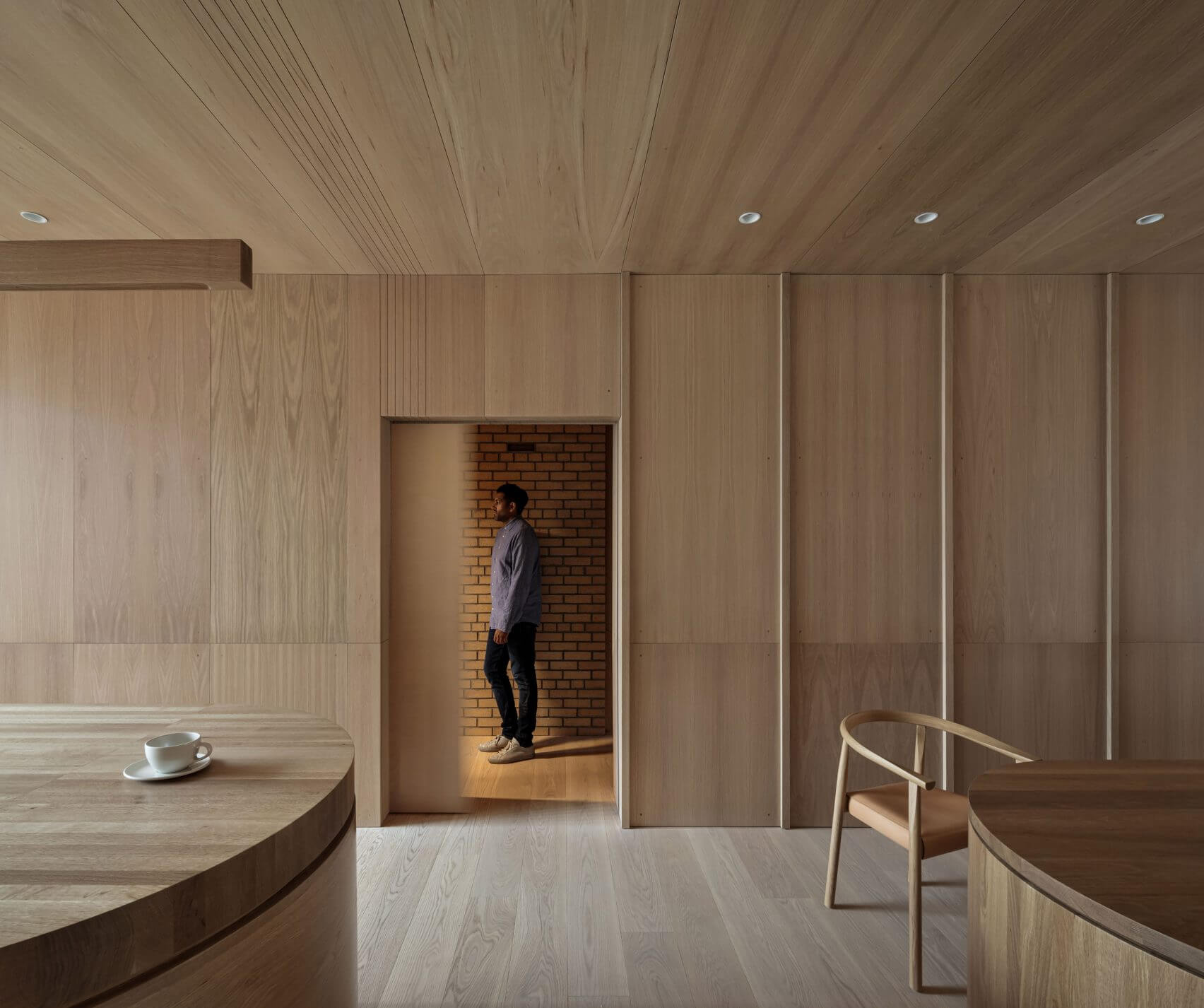
A recent post grabbed my attention, talking about how oak can create very different feelings, finishes and evoke different aesthetics and emotional responses.
Who doesn’t love a bit of emotional wood?
I leaned in and listened intently for the longer format video.
Turns out, the cut of the log gives different grain densities, grain length, overall colour, patina, and so creates very different feels – from rustic and cosy, to sleek and modern. All from the same wood.
The different cuts:
Plain saw, you get variation, movement and results in a cosy, energetic feel – think farmhouse and coastal homes.
Quarter saw is a straighter grain, more refined, with a fleck detail that speaks to craftsmanship and adds subtle depth – think urban environments and commercial spaces.
Rift saw is a rarer cut that’s super straight, clean and consistent, resulting in an ordered aesthetic, calmness and a level of precision – think Scandi cool, Japanese-inspired and mid-century homes.
The cut of the same wood can give very different ’emotional tones’, not the colour, not the stain, but the cut.
Dots joined in my mind at this point: brand inconsistency.
I have worked with my clients who have this issue – that inconsistencies are easy to spot, like fingerprints from the maker on the content being produced.
Whether it’s a design layout, blog post content or social post, oftentimes the creator brings their own take (or cut of wood) to the mix.
The result? A mixed emotional mix of content and materials, all from the same brand (log).
This is where comprehensive brand guidelines, the right tools and training are so important for the team to be able to align on the log, the cut and the emotional tone that’s created as a result. Now, it’s not to say the brand won’t have different emotional tones to hit for different audiences across different channels, but this needs to be intentional and consistent across that audience or channel.
That’s why we spend a lot of time developing our helpful, practical and COMPLETE guidelines that cover everything from brand story, audience desires, motivations and lead messaging, copy guides and examples, flexible design principles, and lots and lots of examples of inspiration of the brand in action – demonstrating how the elements can come together for the appropriate, consistent emotional tone.
So many organisations we start working with either don’t have these in place, or rely on the simple building blocks alone – the hex codes, font family, logo suite, and some messages. This only gives a small snippet of context that’s important when creating your materials. It’s the equivalent of just giving the log without the cut and usage of the wood, where it will live in the world and who it’s for.
The video concludes with a very powerful statement that I think is vitally important for brand leaders to remember: “the little details shape big feelings“.
So if you’re struggling to hit the mark with your marketing, design and materials, ask yourself if your little details (like the cut of the wood, the right tone of voice, the right image selection, the right balance in the layout) are collectively consistent, creating the right big feeling.
If not, get in touch.
Thanks to Agathus Studios, LA, for a really inspiring PSYCHOLOGY OF DESIGN series.